
When a court is expected to handle more than one activity, the surface matters more than many people realize. A family may want basketball, pickleball, and casual games in one space. A school or recreation center may need one area to support classes, practices, and open play throughout the week. In both cases, the wrong surface can limit how the space performs and how comfortable it feels to use.
That is why choosing the right multi-sport court surface is not just about appearance. It is about how the court responds under real use, day after day, across different sports and skill levels. Sport Court® flooring is designed for this kind of demand, making it a practical option for homeowners, schools, facilities, and community recreation spaces that need flexibility without giving up performance.
A court surface does more than provide a place to stand. It affects how players move, how the ball reacts, and how the body feels during and after play.
Traction is one of the first things people notice. If a surface is too slick or inconsistent, changing direction becomes harder, and play can feel less controlled. That matters whether someone is playing a competitive game of basketball or moving quickly during pickleball points.
Shock absorption also plays an important role. Hard, unforgiving surfaces can place greater stress on joints during running, jumping, and other repetitive movements. Over time, that can affect comfort, especially for children, older players, or anyone using the court for longer sessions.
Ball response is another key factor. A court that does not provide a consistent bounce can make it harder to play the intended variety of sports. Basketball, volleyball drills, and tennis-style games all rely on a surface that supports predictable movement and performance.
When these details are overlooked, a multi-activity court may technically support several sports, but not especially well. A surface that works for one activity may be less suitable for another. That is why performance should be part of the decision from the start.
A versatile court surface needs to do more than withstand traffic. It should support a range of sports while still delivering a reliable playing experience.
For a court that may be used for basketball, pickleball, volleyball, or tennis, the surface should offer:
This is where purpose-built athletic court flooring stands apart from surfaces that were not designed for multi-use play. A true backyard court surface or facility court needs to accommodate different activities without forcing compromises every time the game changes.
Sport Court® surfaces are engineered specifically for this type of use. Instead of treating versatility as an afterthought, the design starts with the reality that one court may need to serve many users and many sports. That makes a meaningful difference for families, schools, and organizations looking for long-term value from their investment.
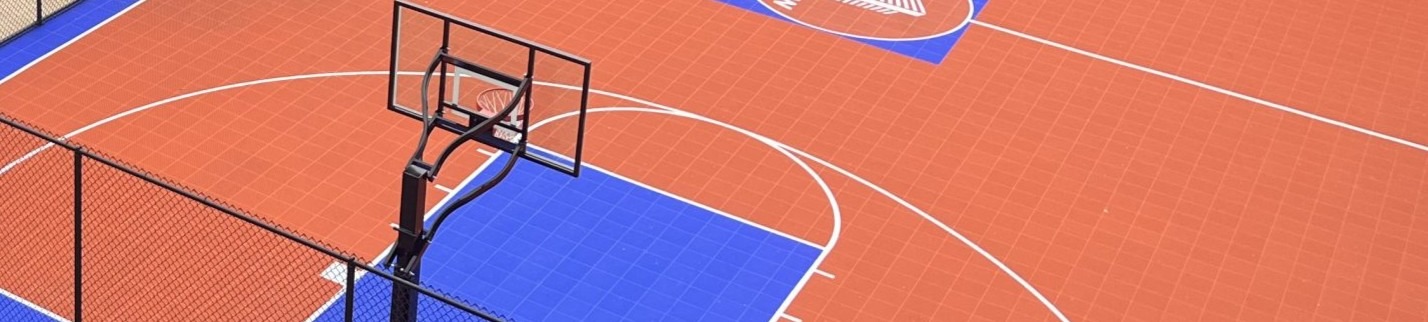
For projects centered on outdoor multi-use play, Sport Court® PowerGame+ is designed to meet the demands of a shared athletic space. It is a strong fit for residential and commercial applications where performance, durability, and flexibility all matter.
Sport Court’s PowerGame+ has the longest-lasting color durability and market-leading safety.
That combination matters on a multi-sport court surface that may be used frequently throughout the year. Color durability helps the court maintain a clean, professional appearance over time, while safety remains a priority for active users of different ages and experience levels.
Another important advantage is layout flexibility. A single court can be configured with multiple sport line markings, allowing the space to support different activities without requiring separate areas for each one. That is especially useful for schools, recreation centers, and homeowners who want one surface to work harder.
For example, a court can be planned to support basketball and pickleball in the same footprint, or to include additional striping for volleyball and other games. That kind of adaptability is a major reason many buyers prioritize basketball court flooring and pickleball court surface performance together rather than selecting for only one sport.
Concrete and asphalt are often familiar starting points in court conversations because they are common hard surfaces. But familiarity does not always make them the best choice for multi-activity use.
Compared with Sport Court® flooring, concrete and asphalt are harder and less forgiving underfoot. That can lead to more fatigue during extended play and may be less comfortable for frequent use. For families with younger players or facilities serving a wide range of users, comfort can be a meaningful factor.
Surface consistency also matters. While hard surfaces can provide bounce, they may not deliver the same overall playing experience people want from a dedicated athletic court flooring system designed for sport-specific use.
Maintenance is another consideration. Over time, traditional hard surfaces may require repairs due to wear, cracking, or surface deterioration. A modular system is a different category of product, and many buyers prefer it because it is purpose-built for court applications rather than adapted from a general paving surface.
The best court surface depends on how the space will actually be used. Before making a decision, it helps to look at a few practical questions.
First, consider whether the court will be indoors or outdoors. Environmental conditions affect how a surface performs and what type of flooring makes the most sense.
Next, think about which sports will be played most often. A court used mainly for basketball and pickleball may have different priorities than one expected to host general recreation, volleyball practice, or youth programming. Understanding the primary uses helps narrow down the right solution.
User age and skill level should also be part of the conversation. A family court, a school activity space, and a competitive training environment may all have different expectations for feel and performance. The right Sport Court® flooring choice should reflect the people who will use it most.
Budget matters, but it should be weighed alongside durability and long-term functionality. A lower-cost surface is not always the better value if it does not support the range of activities you want or if it creates comfort and maintenance issues later.
A multi-use court should make it easier to play more, not harder to choose between activities. The right surface supports versatility, comfort, and consistent performance across the sports your family, students, or facility users care about most.
If you are planning a new multi-activity court and want guidance on the right surface for your space, contact Sport Court® of Pittsburgh. Our team can help you evaluate your goals, your users, and the best flooring option for the way your court will actually be used.

Owner & Founded of J Bird's Landscaping & Owner Sport Court of PA. 18+ Years of experience in Pittsburgh Sport court installation, lawn cutting, patio installation, trucking/hauling, French drain installation, and other landscape/design services.