
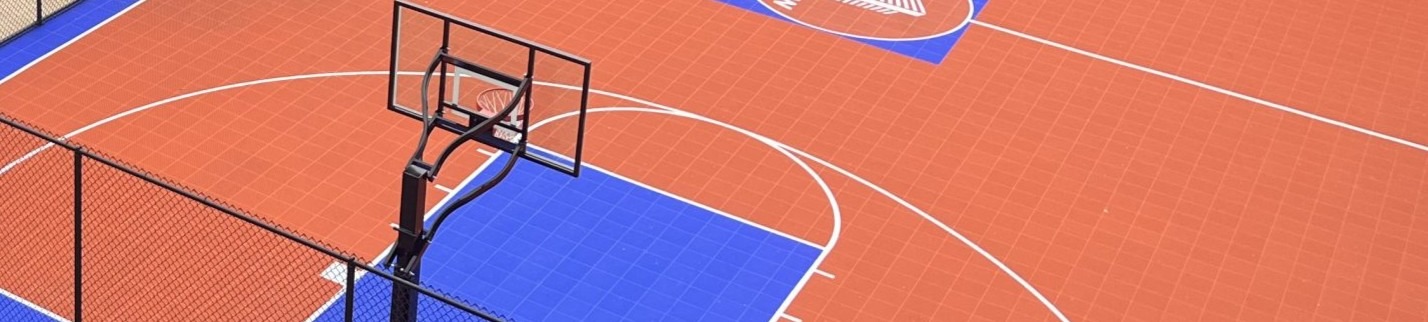
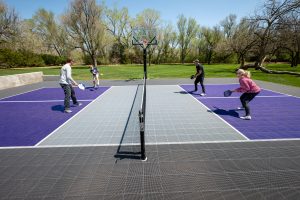
Kids’ interests can change quickly. One year, they may be shooting baskets after school. Next, they may want to try pickleball, volleyball, or a game that involves the whole neighborhood. For families investing in a backyard athletic court, that flexibility matters.
A well-planned court is not just about what your child enjoys right now. It is about creating a space that can support different ages, activity levels, and interests over time. With thoughtful design, a backyard athletic court for kids can become a long-term part of your home, providing your family with a place to practice, play, and spend time together for years to come.
Whether your children are just learning to play or already involved in organized sports, the right layout and features can help your court stay useful as they grow.
When families start thinking about adding an athletic court at home, the first question is often simple: What will our kids use it for right now?
That is an important starting point, but it should not be the only consideration. Children grow through different stages of play. Younger kids often need space for movement, imagination, and casual games. As they get older, they may become more interested in organized sports, skill-building, and regular practice. By the time they are teenagers, the same court may become a place to compete with friends, stay active after school, or spend time with family.
Long-term planning helps homeowners avoid designing a space around one short-term interest. A child who loves basketball at age seven may want to try volleyball at twelve or pickleball at sixteen. A court that is too narrowly planned may not feel as useful later.
A well-designed athletic court gives families room to adapt. It can support casual play, structured practice, and social use without needing to be redesigned every few years. For parents, that means the space is more likely to remain relevant as routines, schedules, and interests change.
A multi-use game court for families should be designed with versatility in mind. That does not mean it has to include every possible feature. The layout should reflect how your family is likely to use the space now and in the future.
Basketball is often a common starting point for families because it works well for solo practice, one-on-one play, and group games. Depending on the available space, a court may also be designed to support pickleball, volleyball, or other backyard activities. Some families want a place for structured sports, while others want a flexible area where kids can run, play, and create their own games.
Seasonal use is another important consideration. In the Pittsburgh region, families often look for ways to make the most of outdoor time throughout the year. A flexible athletic court can support a range of activities year-round. For more ideas, Sport Court® of Pittsburgh shares examples of fall sports to play on your court and summer sports for kids that can help families think through year-round use.
The best design starts with a practical conversation. How many children will use the court? What sports do they already play? Are they likely to have friends over? Do parents want to use the space too? These questions can help shape a court that fits your family, rather than forcing your family to fit a limited layout.
The design details can make a major difference in how well an athletic court grows with your kids. Layout, surface selection, and open space all affect how the court feels and functions over time.
A flexible layout is one of the most important parts of long-term court planning. Families may want space for basketball now, but that same area may need to support pickleball, volleyball, or casual games later.
Thoughtful space planning can help balance current priorities with future possibilities. This may include considering court size, hoop placement, net systems, activity zones, and markings that support multiple types of play. The goal is to create a layout that feels natural for everyday use while leaving room for evolving interests.
A flexible layout is especially helpful for families with children of different ages. A younger child may need space for basic movement and play, while an older sibling may want an area for more focused practice. With the right design, both can use the same court in ways that fit their stage of development.
Explore custom athletic court options for your home to see how a layout can be tailored around your family’s current needs and future plans.
The playing surface is another important part of long-term usability. Families need a surface that supports regular activity and feels comfortable for different types of play. Whether kids are practicing drills, playing casual games, or gathering with friends, consistency matters.
A professionally designed surface can create a dependable area for movement, practice, and recreation. For families, that reliability can make the court easier to use in everyday life. Kids are more likely to spend time outside when the space feels ready for them, and parents are more likely to see the court as a practical part of the home.
The surface should also support a range of activities. A court designed for only one sport may not feel as useful as children grow. A more versatile approach gives families greater flexibility without overcomplicating the space.
A backyard athletic court can serve more than one purpose. It can be a place where a child practices free throws after school, where siblings play together on the weekend, or where friends gather for a casual game.
That balance matters. Some families want a court that supports serious practice. Others want a safe, convenient place for kids to be active at home. Many want both. A strong design leaves room for skill development while still feeling relaxed enough for everyday recreation.
This is especially valuable as children get older. A court that once supported casual play can become a place for training, repetition, and confidence-building. At the same time, it can remain a social space where kids enjoy being active without needing a formal practice or team setting.
A backyard athletic court for kids should support children at different stages of childhood and adolescence.
In the early years, the court may be used mostly for unstructured play. Young children often enjoy open space where they can run, toss a ball, ride small toys, or invent their own games. At this stage, the court does not need to be centered around competition. It needs to invite movement and outdoor activity.
During the middle years, many kids begin developing stronger interests in specific sports. They may join teams, take lessons, or want to practice at home. A flexible court can support shooting, passing, serving, footwork, and other skill-building activities. Having that space at home can make practice more convenient and more consistent.
In the teen years, the court may become more social. Older kids may use it for competitive games, group hangouts, or casual time with friends. It can also give them a reason to spend more time at home while still being active and independent.
This progression is one of the strongest reasons to think beyond a single sport or age group. A court that grows with your kids can shift from play space to practice area to social gathering spot without losing its purpose.
Although the court may be planned with children in mind, it often becomes a space for the whole family. Parents may use it for light activity, siblings may play together, and relatives or neighbors may join in during gatherings.
The family’s use should be part of the design conversation. A court that is easy to access, comfortable to use, and suited to multiple activities can become a natural extension of the backyard. It gives families another reason to spend time outside and creates a setting for shared experiences.
For some homeowners, the court becomes part of birthday parties, weekend cookouts, and casual evenings at home. For others, it becomes a regular practice space for children who are involved in school or club sports. In both cases, the value comes from designing a space that feels useful in everyday life.
A well-planned multi-use game court for families does not have to be overly complicated. It needs to reflect how people will actually use it, both now and later.
Designing an athletic court involves more than choosing a spot in the backyard. The layout, surface, markings, equipment, and intended uses must all work together. That is why many families choose to work with a professional team.
Sport Court® of Pittsburgh designs custom athletic court systems for homeowners who want a space tailored to their family’s needs. The process can account for your available space, your children’s current interests, and the ways you expect the court to be used over time.
Because every family is different, a custom layout can be especially helpful. One household may want a basketball-focused design with room for casual play. Another may want a multi-use setup that supports basketball, pickleball, and volleyball. Another may be planning for children of different ages and skill levels.
Sport Court installations are completed by Certified CourtBuilders®, giving homeowners a professional team that understands how to plan and install residential athletic courts. For families looking for a long-term backyard addition, that experience can help ensure the finished court supports both current use and future flexibility.
Connect with a Certified CourtBuilder® to discuss how your backyard court can be designed around your family’s needs.
Kids grow, interests change, and family routines shift over time. A thoughtfully designed athletic court can adapt to those changes. Instead of serving a single purpose for a single stage of childhood, it can support years of activity, practice, and time together.
For younger children, it can be a place to play freely. For growing athletes, it can become a space for practice and skill development. For teenagers, it can offer a convenient place to compete, socialize, and stay active at home. For parents, it can become a lasting backyard feature that encourages connection and movement.

Owner & Founded of J Bird's Landscaping & Owner Sport Court of PA. 18+ Years of experience in Pittsburgh Sport court installation, lawn cutting, patio installation, trucking/hauling, French drain installation, and other landscape/design services.